When families are deciding on care options, one of the most common comparisons is home care vs long term care Ontario. Both options provide essential support, but they differ significantly in cost, environment, and overall experience.
Understanding these differences can help families make a decision that feels right, not just financially, but emotionally as well.
What Is Home Care?
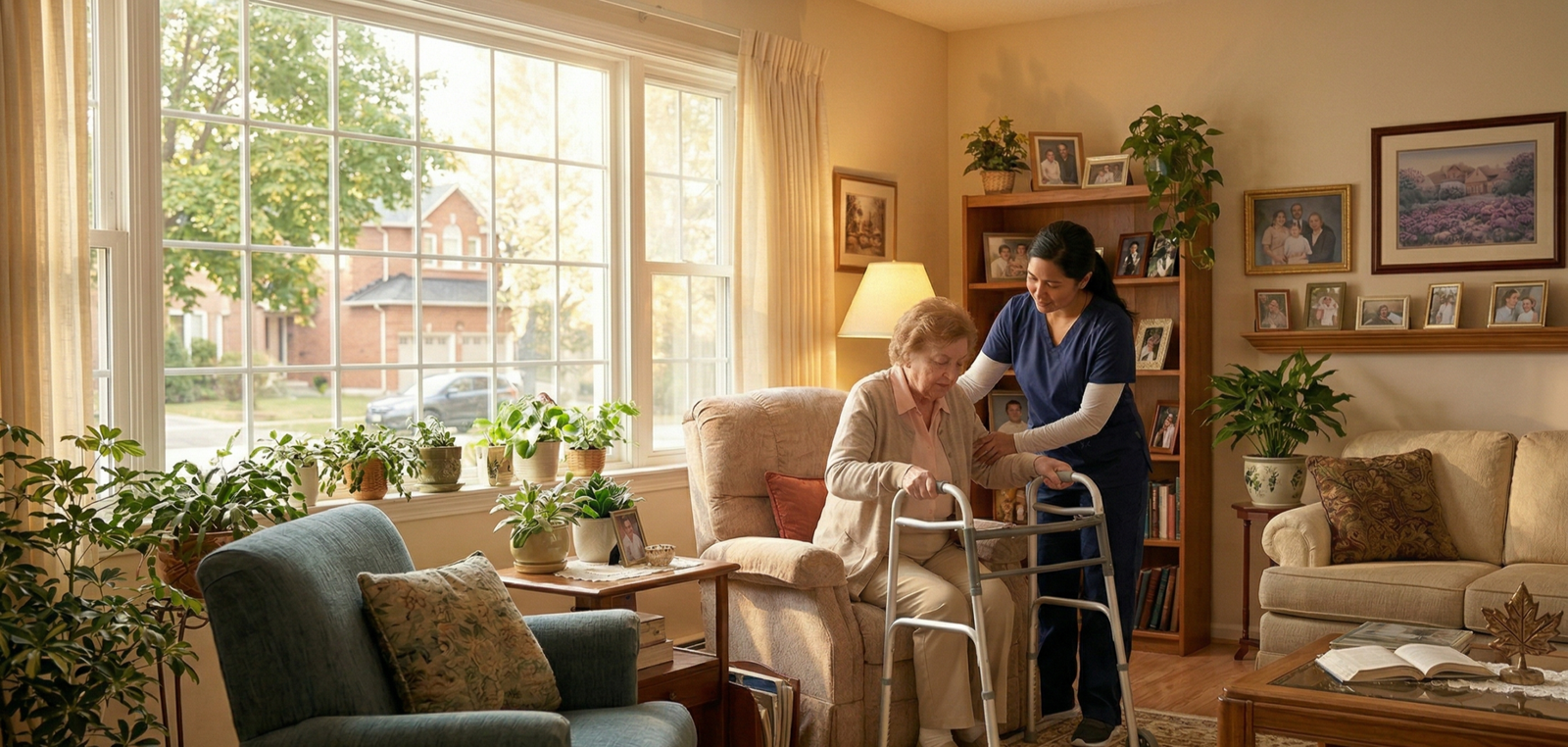
Home care allows individuals to receive support while remaining in their own home. Care is tailored to each person’s needs and can range from a few hours a week to full-time assistance.
Services often include help with daily routines, personal care, mobility support, and companionship. The key benefit is that care is delivered in a familiar environment, which can be especially important for comfort and stability.
What Is Long Term Care?
Long term care involves moving into a care facility where support is provided around the clock. These environments are structured and designed to meet medical and daily living needs for individuals who require consistent supervision.
While long term care offers access to staff and medical support, it also means adjusting to a new environment, shared spaces, and less personalized attention compared to one-on-one care.
Home Care vs Long Term Care Ontario: Cost Comparison
Cost is often one of the biggest deciding factors when comparing home care vs long term care Ontario.
Home care is typically charged hourly, with rates ranging from $28 to $45 depending on the level of support. This allows families to scale care based on their needs and budget.
Long term care costs are usually structured monthly and may be partially subsidized depending on eligibility. However, wait times for placement can be long, and availability may be limited in preferred locations.
For many families, home care offers more flexibility, especially when full-time care is not immediately required.
Comfort and Emotional Impact
One of the biggest differences between these two options is the emotional experience.
Home care allows individuals to stay in a familiar environment, surrounded by personal belongings and routines. This can be particularly beneficial for individuals experiencing memory-related conditions, where familiarity plays a key role in reducing confusion and anxiety.
👉 INTERNAL LINK: dementia and Alzheimer’s support
Long term care, while supportive, requires a transition into a new setting. This adjustment can be challenging for some individuals, especially in the early stages.
Flexibility vs Structure
Home care offers flexibility. Families can increase or reduce hours as needs change, and care plans can evolve over time.
Long term care provides a more structured environment with set routines, shared staffing, and standardized care schedules. While this works well for some, it may not offer the same level of personalization.
For families who are balancing caregiving responsibilities, flexible support can also provide needed relief without committing to a full-time facility.
👉 INTERNAL LINK: respite care services
When Is Each Option the Right Choice?
Home care is often the preferred option when individuals want to maintain independence and remain at home, especially in the earlier stages of needing support.
Long term care may become more appropriate when medical needs increase significantly or when 24/7 supervision is required and cannot be managed at home.
Every situation is different, and the right choice depends on a combination of health needs, family support, and personal preferences.
Final Thoughts
Comparing home care vs long term care Ontario is not just about cost—it’s about finding the right fit for your loved one’s needs and lifestyle.
Many families start with home care and adjust over time as needs evolve. The most important thing is choosing an option that provides comfort, dignity, and the right level of support.